

Window Contractor Singapore
HDB Registered & BCA Approved Window Installation Services
Pang Giap is a BCA-approved window contractor and an HDB-registered renovation contractor (Reg No. HB-09-5466G) in Singapore with over 30 years of industry experience. We handle complete window installations and replacements for residential and commercial properties, ensuring compliance with HDB guidelines, Building and Construction Authority safety standards and condominium MCST requirements.
Professional Window Installation Process
- Onsite Measurement & Inspection: We conduct an onsite assessment and take precise measurements of your window openings, We will also guide you through suitable window types, window configurations, frame colours and glass options (tinted, frosted, or acoustic).
- Permit Submission: We prepare and submit the mandatory window replacement permit application to HDB or condominium MCST before fabrication begins.
- Factory Precision Fabrication: Windows are custom-fabricated by our experienced workshop technician using quality aluminium frames, glass panels and hardware component. This helps ensure a proper fit and smooth operation after installation.
- Safety-First Installation: Installation is carried out by our experienced window installers. Before installation we place protection coverings on the floor to protect the floor during the work. Existing windows are carefully removed and new window frames are installed securely. All window panels are then adjusted to ensure proper alignment.
- Handover & Safety Check: We inspect every locking mechanism, friction stay, handle, and track to ensure secure and smooth operation, safety compliance, proper seal tightness and post-installation clean-up before site handover.
Window Types: Casement, Sliding, Folding, Lattice, Top Hung & Louvre
Choosing the right aluminium window for your HDB flat, condominium, or landed home depends on room layout, available space, ventilation needs, and applicable building guidelines. Pang Giap supplies and installs a range of window systems suitable for different areas of Singapore homes and properties.
The table below compares six common window types and their typical applications.
Swipe left or right to view the full comparison.
| Window Type | Max Panel Width (HDB)/ Configuration | Best Locations | Key Advantages |
|---|---|---|---|
| Casement Windows | Max 700mm panel width | Balconies, Living Rooms, Bedrooms | Wide opening for ventilation, tighter seal for noise reduction |
| Sliding Windows | Max 1200mm panel width | Balconies, Bedrooms, Service Yards | Wider glass panels, broader outdoor view, space saving |
| Folding Windows (Bi-Fold) | Multi-panel folding system | Kitchen Counters, Bar Counters | Create unobstructed open-concept view |
| Lattice Windows | Casement, sliding & folding types available | Heritage & Modern Homes | Decorative internal grid design, improves privacy |
| Top Hung Windows | Top-hinged push-out mechanism | Upper Ventilation Panels, Bathrooms | Allows ventilation, prevent rainwater entering |
| Louvre Windows | Adjustable glass or aluminium panels | Corridors Facing Areas, Bathrooms | Precise ventilation control, provide greater privacy |
1. Casement Windows
Casement windows are outward push-opening aluminium windows supported by friction stays. They are a popular option for bedrooms, living rooms, kitchens and other areas because they open wide to allow good ventilation and press tightly against seals when locked, improving sound insulation and air-conditioning efficiency.
- Grade 304 Stainless Steel Rivets & Friction Arms: In compliance with BCA window safety requirements, our casement windows are installed with grade 304 stainless steel rivets and friction stays to securely support the window panels and withstand external wind loads.
- Maximum Ventilation & Natural Light: Because the panels swing out to a full 90-degree angle, casement windows allow more fresh air and natural light into the room. Their wide opening also provides unobstructed view of the surroundings.
- Tighter Seal for Noise Reduction: When latched, the window panel presses firmly against continuous rubber perimeter strips to prevent water seepage during heavy storms and reduce external sound, such as road traffic noise.
- Versatile for Small Openings: Casement windows are practical for smaller openings where sliding windows may not be suitable, such as single panel windows near air-conditioning condenser units in HDB.


2. Sliding Windows
Aluminium sliding windows operate by gliding horizontally along a track and roller system. The panels can be pushed and pulled smoothly with little effort, making them a practical and space-efficient window option for Singapore homes. As sliding window panels are usually wider than casement window panels, they can also provide a broader outside view with less frame obstruction.
- Mandatory Safety Stoppers & Safety Angle: Our sliding window panels are fitted with safety stoppers at the top and bottom, together with safety angles along the sliding track. These safety components prevent the panels from jumping out of their tracks or dislodging during rough use.
- Broader Outdoor Views: Compared with casement windows, sliding window panels can generally be made wider. According to the HDB panel width limits, a sliding window panel can be up to 1200mm wide, compared with 700mm for a casement window panel. Wider glass panels and fewer vertical frame lines can provide a broader outside view and allow more natural light into the room.
- No Exterior Clearance Required: Sliding windows are suitable for HDB service yards with ceiling laundry racks or outdoor clothes drying poles. As the panels move sideways instead of swinging outward, they do not require exterior clearance to open.


3. Folding Windows for Kitchen Counters and Bar Counters
Aluminium folding windows (bi-fold windows) consist of multiple hinged panels that fold and stack neatly to one side along a smooth track system. They are practical and versatile option for kitchen counters, bar counters, and semi-open kitchens, allowing homeowners to switch easily between a wide open serving space and an enclosed cooking area.
- Seamless Open-Concept Living: The panels slide and fold open to create an unobstructed pass-through counter between the kitchen and living or dining area, making it convenient for serving food and drinks and hosting guests.
- Cooking Odours & Smoke Barrier: When fully closed, the interlocking panels help separate the kitchen from the living area and prevent cooking smells, smoke and grease from spreading into other parts of the home.
- Modern Slim-Profile Frames: Our folding windows are fabricated with slim aluminium profiles that provide a clearer view and allow more natural light to pass through, helping to preserve wide sightlines even when the windows are closed.
- Flexible Glass Customization: Folding windows can be fitted with different glass options, such as clear, tinted or frosted glass, depending on your requirements.


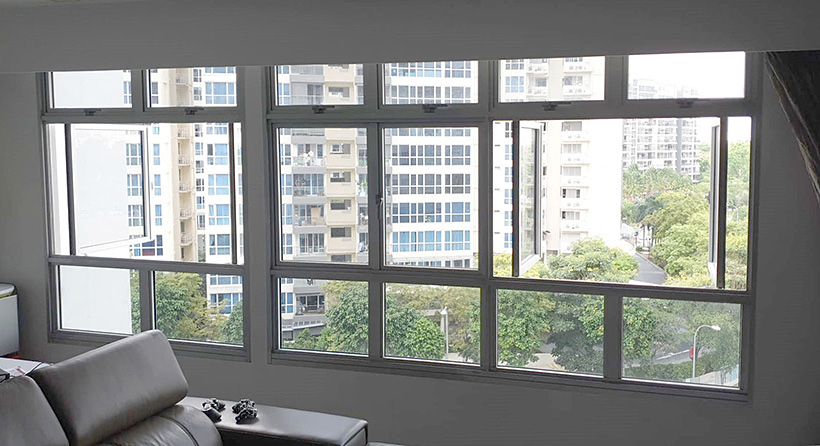
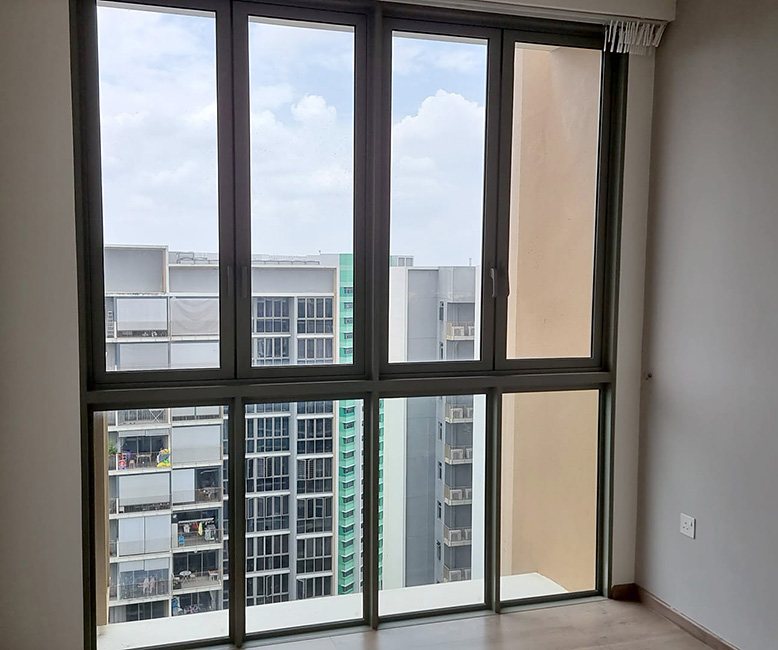
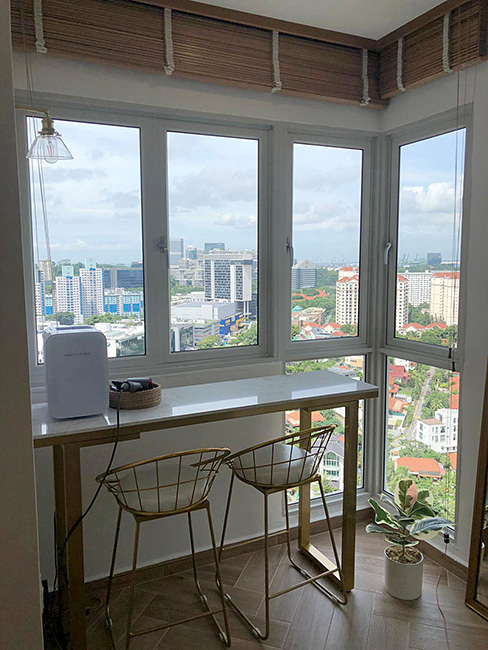
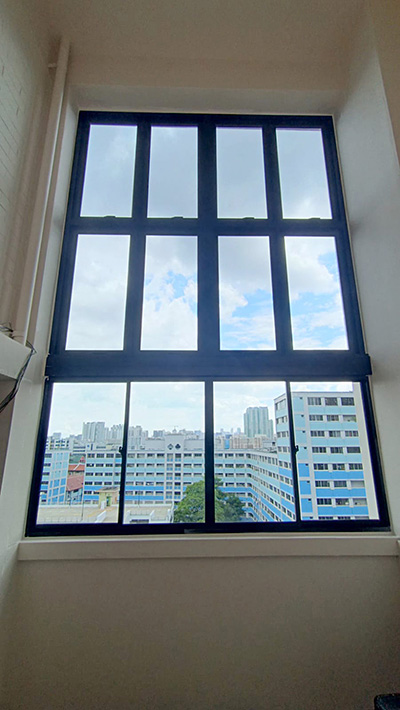
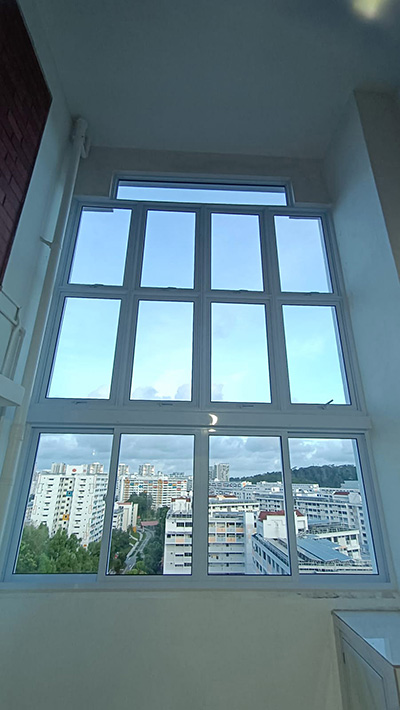
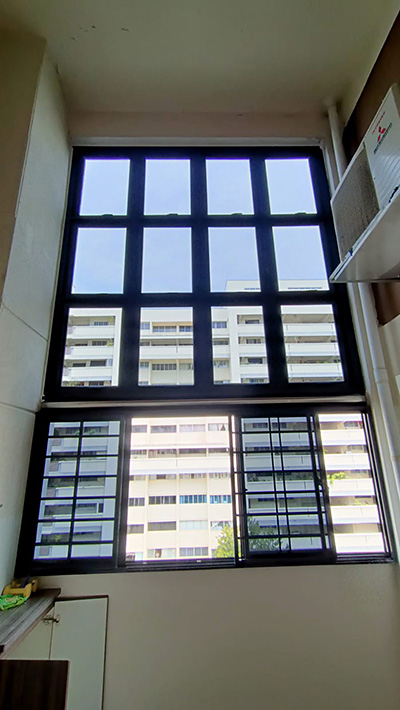
4. Full Height and 3/4 Height Glass Windows
Full height and 3/4 height glass windows are aluminium window systems consisting of large glass panels supported by reinforced aluminium frames. Commonly found in BTO flats, HDB executive maisonettes, condominiums, landed homes, and commercial offices, they help maximize natural daylight entry and provide expansive and unobstructed views.
- Mandatory Laminated Safety Glass: Bottom fixed glass panels of full height and 3/4 height windows are also known as safety barriers when they are located below 1 meter from the finished floor level. As required by BCA building control regulations, the bottom fixed glass panels must use laminated safety glass. Also, the laminated glass must be 13.52mm thick for full height windows, and 9.52mm thick for 3/4 height windows.
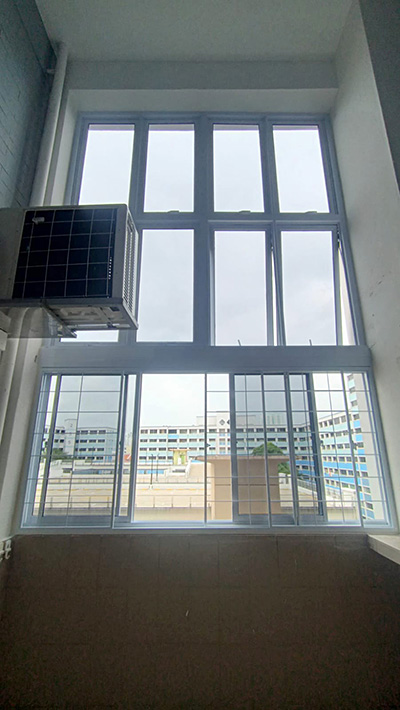
- HDB Maisonette Balconies Installation: We specialize in installing full height windows for HDB maisonette balconies. These balcony window structures generally consist of a bottom row of casement or sliding windows, followed by a support beam above, and then three rows of top hung or sliding windows. Due to the height of the upper window rows, scaffolding is required for installation.
5. Lattice Glass Windows
Aluminium lattice windows feature decorative crisscross or grid-style bars that divide the glass area into smaller panes. They offer an ideal balance of architectural style, enhanced visual privacy and decorative appeal. Available in casement, sliding, and bi-fold configurations, lattice windows are suitable for Singapore homeowners who prefer either a heritage-inspired or modern decorative appearance.
- Enhanced Privacy: The multi-pane lattice design can help reduce direct visibility through the window, making it more difficult for outsiders to see clearly into your living space. This is particularly useful for ground-floor units, homes located close to public walkways and HDB corridor-facing rooms.
- Additional Security Layer: The aluminium lattice bars act as an integrated barrier within the window system. When paired with external window grilles, they can make forced entry more difficult.
- Custom Architectural Styles: Lattice windows can complement a range of interior and architectural styles, from classic colonial-inspired and heritage designs to contemporary and modern homes.
- Versatile Glass Options: Lattice windows can be fitted with different glass options, such as frosted, fluted, tinted or laminated glass, depending on your requirements for privacy, safety and appearance.
We also manufacture and install matching lattice glass doors. Explore our Lattice Doors Gallery.


6. Top Hung Windows
Top hung windows (awning windows) are hinged at the top of the frame and swing outward from the bottom, supported by heavy-duty stainless steel friction stays at both sides. Top hung windows are commonly used for bathrooms and toilets where ventilation, privacy and protection from rain are important.
- Laminated Safety Glass: In compliance with BCA window safety requirements, our top hung windows for toilets and bathrooms are fitted with laminated safety glass.
- Ideal for Upper Window Panels: Top hung windows can also be used as upper ventilation panels for taller window configurations. This allows fresh air to circulate while the lower window panels remain closed, providing greater flexibility in controlling ventilation.


7. Adjustable Louvre Windows
Adjustable louvre windows consist of horizontal panels (also known as blades) made of glass or aluminium, held together by U-channel brackets and operated by a lever handle. They provide adjustable ventilation and privacy, making them a practical choice for HDB corridor-facing rooms, bathrooms and toilets.
- Safety Glass & Cleats: As required by HDB, we use U-channel cleat brackets to hold the glass blades securely, making the window suitable for daily operation and helping it withstand strong winds. Wired safety glass (6mm thick) is also used for toilets as required.
- Versatile Airflow Control: A smooth lever mechanism allows you to adjust the blades to different angles to control airflow. The louvres can be opened to release hot, humid air and bathroom steam while allowing fresh air to enter.
- Corridor Privacy Options: For HDB corridor-facing windows, clear glass can be replaced or combined with frosted privacy glass or opaque aluminium slats to block direct sightlines from passing neighbours while maintaining airflow and ventilation.


Window Glass Colours
Our aluminium framed glass windows can be made with different types of glass such as clear glass, frosted privacy glass, tempered glass, laminated glass and double glazed acoustic glass. We will recommend a suitable window type based on the opening size, ventilation needs, privacy requirements and site condition.

From Left to Right: Tea, Light Grey, Dark Grey, Green, and Blue Colour.
Tinted glass can act as privacy glass during the daytime. During the day, people from outside cannot see through your tinted glass window into your room. This is because the tinted glass reduce the visibility from brighter side to the darker side. Whereas during the night when you turn on your light, your room becomes brighter, people outside will be able to see into your room.

From Left to Right: Karatachi, Clear, Mislite, Nashiji (Orange Skin) and Wire Glass.
All these glass (except for the clear glass) have frosted glass/ blurry effect, they are translucent, and also known as privacy glass.
For the window (aluminium) frame, we have many colours to offer, including bronze, silver anodised colour, white powder coated and more.
How To Get A Quote From Us
We offer free onsite measurement and consultation, and we will also bring our samples for you to view. Alternatively you can also provide us with the following information so that we can give you estimated price for your windows:
- Type of house or office
- Measurement/ size of your windows
- Pictures of your whole windows (showing the full height and width, without curtains blocking the windows)
- Floor plan (if any)
Whether you need to replace old windows, upgrade to sliding windows, install casement windows, or choose a better design for your home, our team provides reliable advice as an approved Singapore window contractor. Contact us today for site measurements, technical consultation, and competitive pricing.
Frequently Asked Questions (HDB, Condo & Residential Windows)
Who is qualified as an HDB window contractor in Singapore?
A qualified HDB window contractor in Singapore must be a company or firm registered with the Building and Construction Authority (BCA) under the regulatory workhead RW01 and be listed with HDB as an approved window contractor.
Legitimate HDB contractors hold an "HB" directory reference number, such as Pang Giap’s registration number HB-09-5466G.
Only BCA approved and HDB registered window contractors are permitted to carry out installation, repair, or replacement of windows in HDB flats.
Do I need an HDB permit to replace the windows of my HDB flat?
Yes. All window replacements require an HDB renovation permit and must comply with HDB's window installation and renovation guidelines.
Flats handed over from 1st July 2007 onwards (including BTO & resale flats): Installation or replacement of new windows will need to follow the window configuration and colour of the original windows provided by HDB. For service yards, the window must adhere to the estate's approved colour scheme.
Flats handed over before 1 July 2007 (older flats): Homeowners have greater flexibility to modify window opening styles (e.g., casement or sliding) and frame colours.
Your appointed window contractor is required to apply for and obtain the HDB renovation permit before installation work begins.
Can I change the colour of the windows in my HDB or BTO flat?
It depends on the handover date of your HDB flat:
If your HDB flat was handed over from 1st July 2007 onwards (including BTO flats), you are not allowed to change the colour of your windows, you must follow the colour scheme of the original windows provided by HDB.
If your flat was handed over before 1st July 2007, you have the flexibility to choose your preferred aluminium frame colours (such as powder-coated white, black, or bronze anodised) and glass tints (such as clear, tea, or grey).
Am I allowed to change my windows from sliding to casement for HDB or BTO flat?
In accordance with HDB guidelines, for flats handed over from 1st July 2007 onwards, you need to follow the original windows type. You are not allowed to change the window from sliding to casement, or casement to sliding.
For older flats handed over before 1st July 2007, you are permitted to change the window type to your preferred choice (casement, sliding or louvre window).
For HDB windows facing the common corridor, casement windows are not allowed. Only sliding windows or adjustable louvre windows are permitted.
Do I need a permit to replace the windows of my condominium unit?
It depends on your condominium management (MCST) renovation guidelines. Many condo managements will require the submission of a renovation application before changing the colour, proportion or type of the existing windows.
MCST Approval: You need to submit a renovation application and obtain approval from your estate's Management Corporation Strata Title (MCST) before installation work begins.
BCA Approved Window Contractor: Work must be carried out by an approved window contractor registered with the Building and Construction Authority (BCA) under regulatory workhead RW01.
Which comes first during renovation? Window or window grilles?
Windows are usually installed before wall plastering and painting are done. While window grilles are installed after the wall painting is completed. On our side, we will wrap our grilles with protection sheets after installation so that the grilles will not be affected by any painting works.
After I order the windows, how long does installation take?
Usually preparation and fabrication take around 2 to 3 weeks. Installation can usually be completed within 1 to 2 days.
We also supply and install window grilles that can be added to your windows for extra security. Please visit our window grill pages:
Slim Mild Steel Window Grilles – slim-profile grilles that provide security with minimal obstruction to your view.
Wrought Iron Window Grilles - Traditional decorative grilles that are strong, durable and highly secure.
Aluminium Window Grilles - Lightweight, simple and cost-effective grilles that are easy to maintain.
If you have any enquiry or book an appointment, please contact or email us.